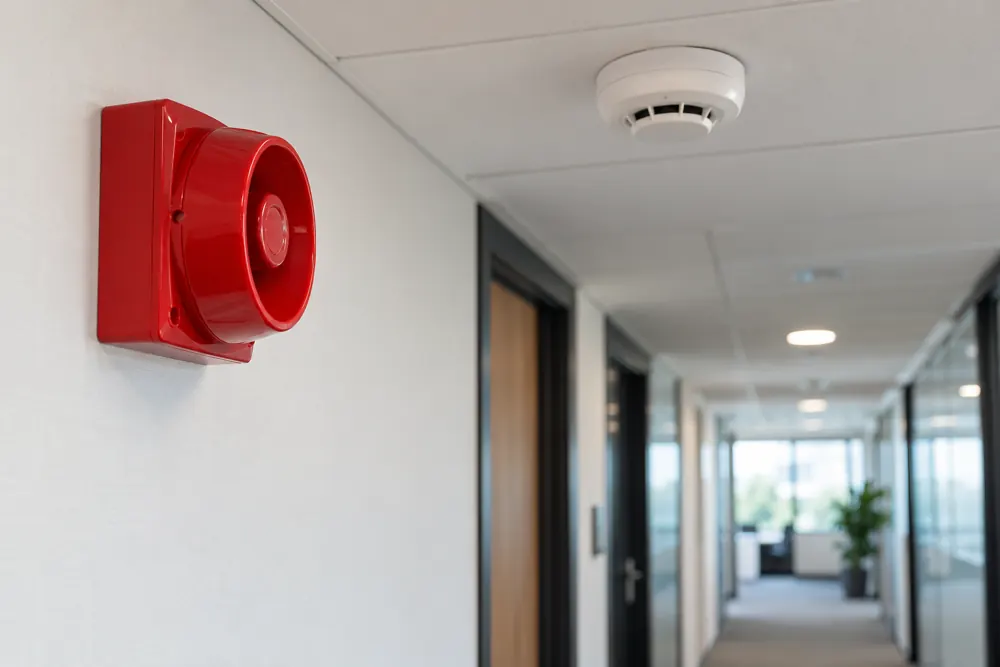
Maintenance With A Clear Record
A fire alarm is part of your building’s evacuation arrangements. Planned maintenance helps identify faults, deterioration and changes that could affect its operation. We help commercial premises in Glasgow arrange servicing with an agreed scope, access plan and a record that the person managing the building can use.
When requesting support, give the panel manufacturer, any visible fault indication and the last service date if known. Tell us whether the system is linked to remote monitoring or controls other equipment. This information helps distinguish a routine service from a fault investigation or a wider review of coverage.
Keep your on-site logbook available. Repeated unwanted alarms, temporary isolations and unresolved defects are useful evidence for the engineer. A maintenance visit is more valuable when the engineer can see what has happened between appointments, rather than only the panel condition on the day.
Servicing And User Checks Have Different Roles
BS 5839-1:2025 covers the design, installation, commissioning and maintenance of fire detection and alarm systems in non-domestic premises. A servicing programme should be appropriate to the system and its risks. Ask the maintainer to state the proposed visit schedule and what is included at each attendance.
Routine user testing does not replace specialist servicing. Nominate trained staff to carry out the user checks set out in the system instructions and your fire safety arrangements. Record results and faults, and pass concerns to the appropriate person instead of repeatedly resetting an unexplained indication.
Prepare The Premises For Testing
Before attendance, identify who can authorise testing and arrange access to the panel and relevant devices. Advise occupants about planned alarm operation and coordinate with tenants or neighbouring occupiers where a shared system is involved. Production environments may need a particular test window.
If signals are remotely monitored, agree how test mode and reinstatement will be managed through the authorised procedure. The same care applies to linked equipment such as door releases. Record any isolation and confirm normal operation afterwards, with named responsibility for checking that the system has been restored.
What The Maintenance Process Involves
Begin with the previous report and the history of events since the last visit. The engineer can then plan the inspection and testing against the agreed scope. Areas that cannot be accessed should be identified in the report, along with what is needed to complete the outstanding work.
A service can reveal more than a failed component. New partitions, changed storage or altered occupancy may mean the system no longer suits the building. Servicing and a design review serve different purposes, so any recommendation for changes should explain the reason and the evidence behind it.
At handover, ask for a report that distinguishes completed work, remaining faults and recommended improvements. Get the implications of any unavailable protection explained to the dutyholder. Keep quotations for further work linked to the defect record so approval and completion can be tracked without ambiguity.
Costs, Takeovers And Repair Work
Maintenance costs vary with the type and size of the system, device access, monitoring arrangements and the level of documentation available. A takeover of an unfamiliar installation may need more investigation than a routine visit to a well-documented system. High-level devices can also require separate access arrangements.
Confirm whether fault call-outs, replacement parts and access equipment are included in a maintenance agreement. For repairs, ask for the defect, proposed remedy and any compatibility issue to be explained. Avoid assuming that an alarm service certificate also confirms the adequacy of the original design or every later alteration.
Fire Alarm Maintenance FAQs
Can You Help With Repeated Unwanted Alarms?
Repeated unwanted fire alarms need a review of the event history, detector environment and any recent changes in the building. Record the location, time and activity linked to each event. Do not disable detection to stop disruption. A suitable investigation can identify whether maintenance, management changes or a design review is needed.
What If The Fire Alarm Shows A Fault?
A fire alarm fault should be recorded and reported through your building’s agreed procedure. Identify which parts of the system may be affected and ask a competent maintainer for advice. The dutyholder should consider interim precautions while the problem is unresolved, with the fault and subsequent repair retained in the logbook.
Guidance For Your Premises
Read Scottish Government guidance for existing non-residential premises. Standards need to be applied to the agreed scope and current building use.